

How to Calculate Torque for a DC Gear Motor?
When you’re designing a mechanism, whether a robotic arm, a conveyor, or an automatic litter box, you need to know the real torque your motor will deliver at the output shaft. A DC gear motor combines a high-speed motor with a gearbox to multiply torque and reduce speed. Calculating that output torque is straightforward once you understand the basic relationship.
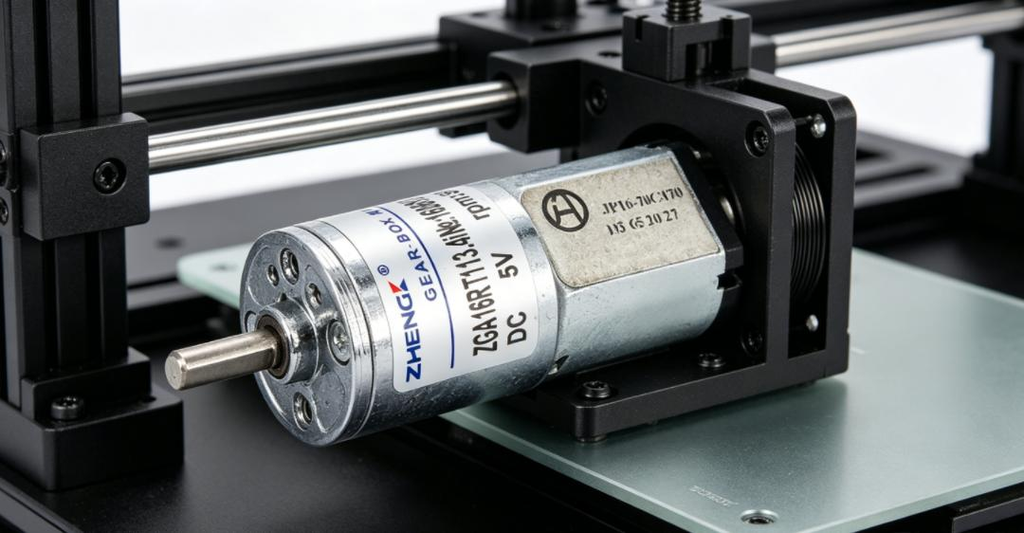
The Basic Formula
Output Torque = Motor Torque x Gear Ratio x Efficiency
Let’s break that down:
Motor Torque:This is the torque produced by the bare DC Brush Motor before any gearing. It is usually given in the motor datasheet as “rated torque” (continuous) or “stall torque” (maximum).
Gear Ratio: For example, a 30:1 ratio means the output shaft turns once for every 30 rotations of the motor shaft.
Efficiency: Gearboxes are not 100% efficient. For a metal gear for a DC Motor planetary gearbox, efficiency is typically 70%-95% per stage. Spur gearboxes are slightly lower, and worm gears are lower still.
Step-by-Step Example
You have a DC brush motor with a rated torque of 0.2 Nm (200 mN·m). You attach a 50:1 planetary gearbox that uses metal gears for DC motor construction with an efficiency of 85%.
Step 1: Multiply motor torque by gear ratio: 0.2 Nm x 50 = 10 Nm
Step 2: Multiply by efficiency: 10 Nm x 0.85 = 8.5 Nm of output torque
That’s the continuous torque your DC gear motor can deliver at the output shaft.
Important Considerations
Stall torque: The maximum instantaneous torque before the motor stops. Do not use stall torque for continuous operation, or your metal gear for DC motor gearbox will overheat or strip teeth.
Gearbox material: Metal gear for dc motor assemblies handle higher torque and last longer than plastic gears. Always check the gearbox’s maximum rated torque.
Motor type: A DC brush motor provides good starting torque, but brushless or permanent magnet types may have different torque curves.
Practical Tip: Measure If You’re Unsure
For critical applications, calculate first, then test with a torque wrench or a hanging weight on a pulley. Many engineers overspecify “just in case”, but that adds cost and size. A proper calculation saves both.
Torque Calculation FAQ
Q: Why do I need to include efficiency in the torque calculation?
A: Because no gearbox is perfect. Friction between the metal gear for the DC motor, teeth, bearings, and lubricant consumes some of the motor’s power. Ignoring efficiency will make you think the output torque is higher than it really is, leading to a motor that stalls under load.
Q: Does a DC brush motor’s torque change with speed?
A: Yes. A DC brush motor produces its highest torque at stall and gradually decreases as speed increases. For continuous operation, always use the rated torque from the datasheet, not stall torque. That rated value already accounts for safe thermal limits.
Q: Can I calculate torque for a DC gear motor if I only know the motor‘s no‑load speed and current?
A: Not so accurately. You need the motor torque constant or a torque-speed curve. Not accurately. You need the motor torque constant or a torque-speed curve. Or just calculate the output torque of the DC gear motor.


